A cinematic portrait of a beautiful Lagotto Romagnolo dog
The World's Only Certified Truffle Dog

Lagotto Romagnolo

From ancient Italian marshlands to your home.
The complete editorial guide to the perfect companion.

Scroll to Explore
Weight 11–16 kg AKC Recognized 1996 Lifespan 15–17 yrs Top 15 Intelligence Truffle Yield ~8kg/day Origin: Romagna, Italy Waterproof Coat 300M Olfactory Receptors Weight 11–16 kg AKC Recognized 1996 Lifespan 15–17 yrs Top 15 Intelligence Truffle Yield ~8kg/day Origin: Romagna, Italy Waterproof Coat 300M Olfactory Receptors
01
The Origin

Born in the
Marshes.


Centuries of breeding in the marshlands of Emilia-Romagna forged an energetic, intelligent, and highly adaptable companion.

Once a water retriever, now the undisputed king of the truffle forests. They thrive on having a job to do.

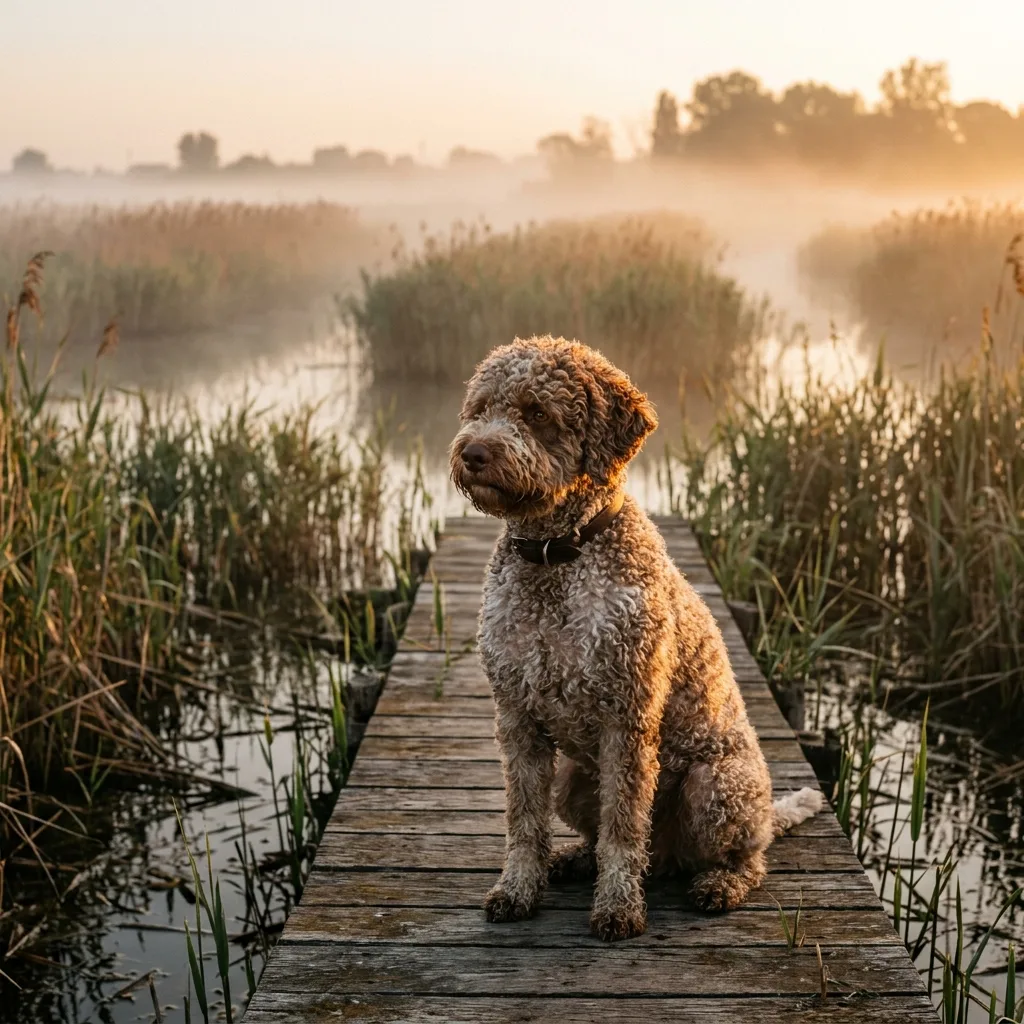
Lagotto in marshland
02
The Science

The 300 Million
Receptor Nose.


A Lagotto experiences the world fundamentally differently. While humans have 5 million olfactory receptors, the Lagotto boasts over 300 million.

300M Receptors
Top 15 Intelligence
Scent science
03
The Temperament

Fiercely Loyal.
Deeply Human.


They are remarkably sensitive and bond perfectly with their family. They read your room before you even realize it.

Affection
Trainability
Energy Level
Temperament eyes

Ready to Commit?

Start building your dog's custom life profile, or find a certified breeder.

Create Profile

Sign Up Free

Track life stages, weight, and build a digital sanctuary for your companion.

Create Account
Get a Lagotto

Get a Lagotto

Research AKC Breeders of Merit, European imports, and purebred guarantees.

View Breeders
A purebred Lagotto Romagnolo

Buying Options

Finding a purebred Lagotto from a responsible breeder guarantees health and temperament.

AKC Breeders of Merit

$3,500 - $5,000

The safest route. These breeders perform all necessary genetic testing (LSD, JE, BFJE) and hip/eye certifications.

  • Waitlists are typically 6-18 months.
  • Pups are socialized using Puppy Culture protocols.
  • Includes health guarantees and lifetime return policies.
Search AKC Marketplace

European Imports

$4,000 - $6,500

Importing directly from Italy or other European countries where the breed is more established can offer diverse bloodlines.

  • Requires a pet transporter or flying in-cabin.
  • Ensure the breeder is registered with their country's kennel club.
  • Consider language barriers and transport stress.
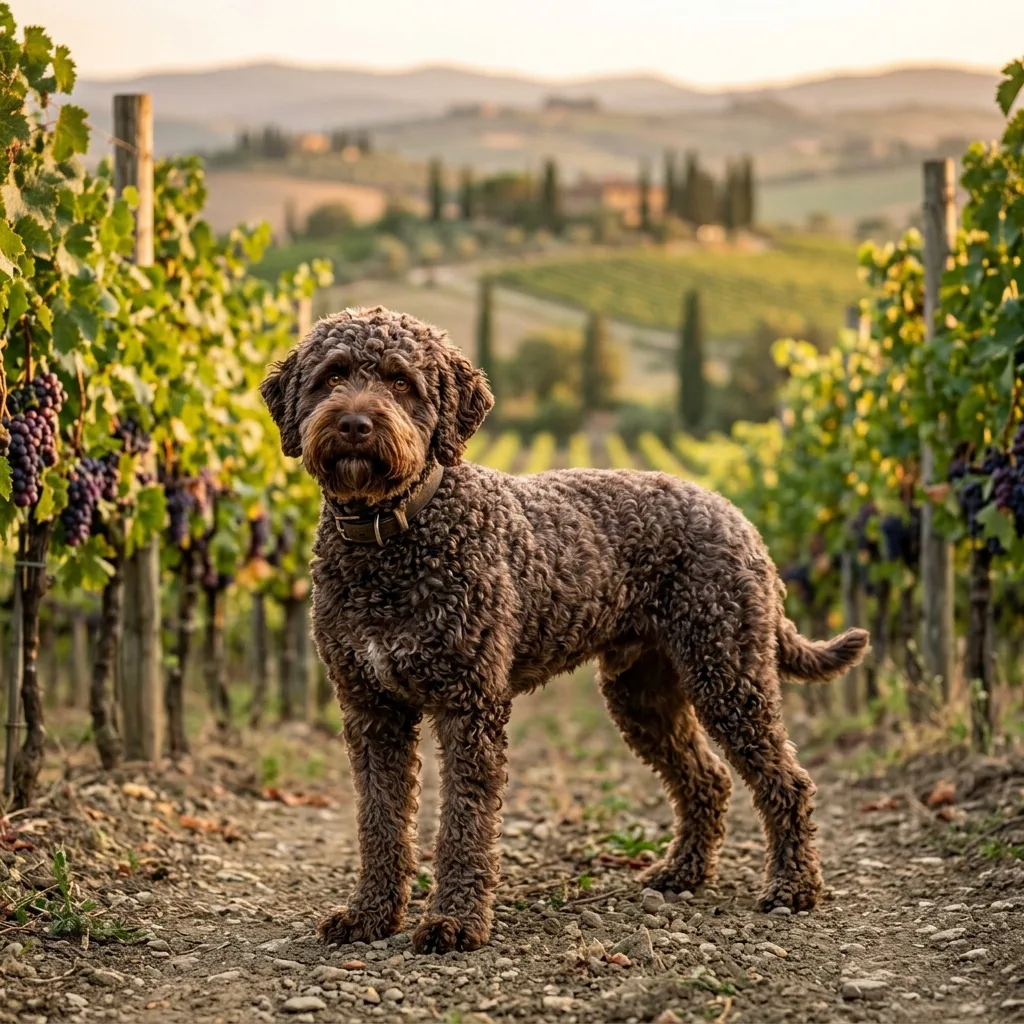
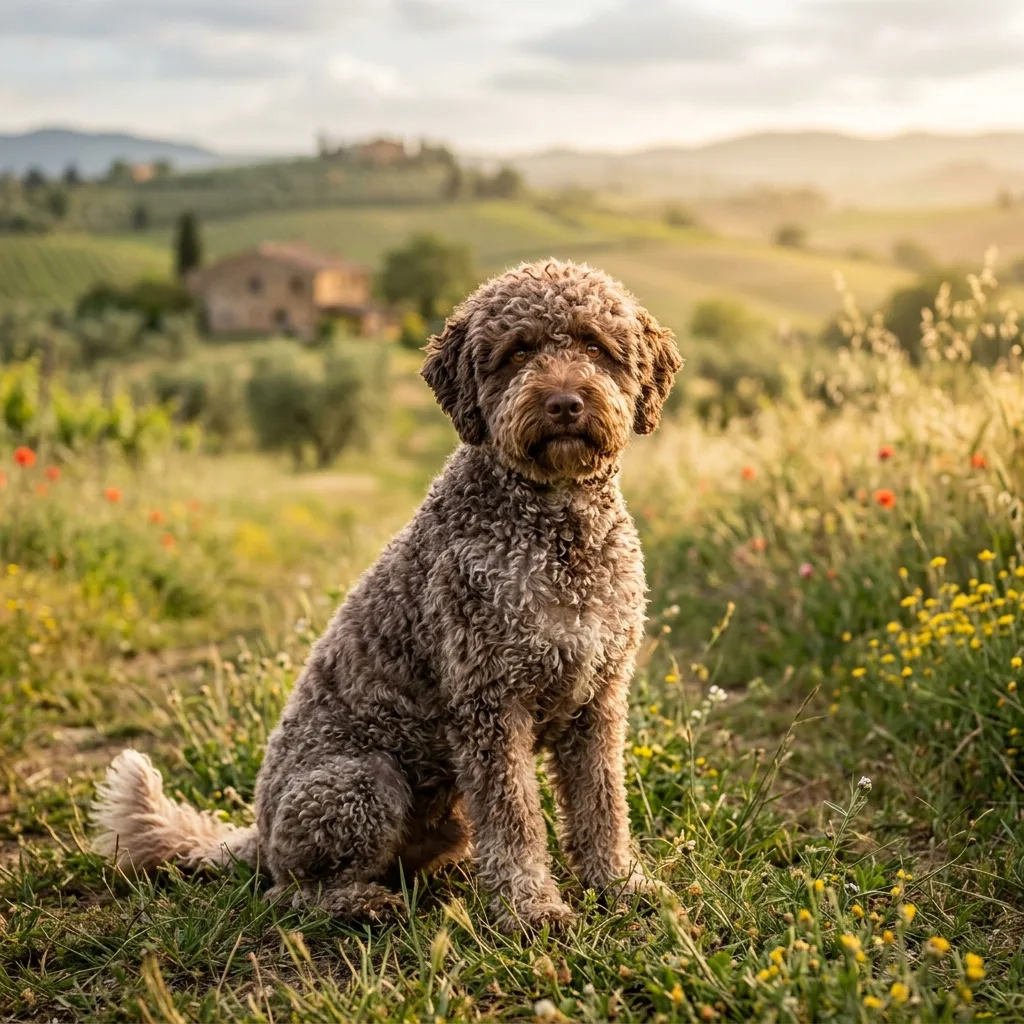
A beautiful Lagotto Romagnolo dog with curly brown coat sitting in an Italian countryside at golden hour
The World's Only Truffle-Hunting Breed

Lagotto Romagnolo The Complete Breed Encyclopedia

From the ancient marshlands of Italy's Romagna region to truffle forests worldwide — discover everything about this extraordinary, intelligent, and deeply loyal curly-coated companion.

Origin Italy
Group Sporting
Lifespan 15–17 yrs
Size Medium
Coat Curly
Shedding Minimal
Explore

Explore the Guide

Dive deep into every aspect of understanding, caring for, and bonding with your Lagotto Romagnolo.

Personalize Your Guide

Enter your dog's details to adapt the timeline to their exact life stage.

Months
Days
Weeks
Months
Years

Your Dog's Growth Guide

Slide through every stage of your Lagotto's life — from the first breath to their golden senior years. See exactly what to expect, what to train, and how to care for them at every age.

12 weeks
Puppy
Birth 1 Year 5 Years 10 Years 17 Years
Physical Development
Loading...
Behavior Patterns
Loading...
Nipping & Mouthing
Loading...
Toilet & Potty
Loading...
Scent & Sniffing
Loading...
Health Watchpoints
Loading...
Home Training & Treats
Loading...
Boarding & Training School
Loading...
Training Focus
Loading...
Sleep Patterns
Loading...
Socialization
Loading...
Treats & Rewards
Loading...
Lagotto Romagnolo in Italian marshland at golden hour
The misty marshlands of Romagna, Italy — where the Lagotto's story began as a water retriever centuries ago.

Born From Ancient Italy

Eight centuries ago, in the misty marshlands of the Romagna region, a dog emerged that would carry the memory of an entire civilization in its curls. This is their story.

16TH CENTURY

The Water Dog of Romagna

The breed's story begins in the vast marshlands and lagoons of Italy's Po River delta, near Comacchio and Ravenna. Known as "Càn Lagòt" — meaning "water dog with a curly coat" in Romagnolo dialect — these dogs were prized gun dogs and water retrievers. Their dense, waterproof curly coat and exceptional swimming ability made them indispensable to hunters working the wetland marshes of the Romagna region.

LATE 1800s

The Great Transition

As the Italian wetlands were drained and reclaimed for agriculture, the breed's original role as a water retriever diminished. But the Lagotto's extraordinary nose discovered a new purpose: truffle hunting. Their exceptional sense of smell, intelligence, and trainability made them the perfect partners for searching underground for the prized fungus. Over generations, their prey drive was intentionally suppressed so they would focus exclusively on truffles rather than being distracted by game.

1970s

The Breed's Darkest Hour

By the early 1970s, the purebred Lagotto Romagnolo population had dwindled to dangerously low numbers. Crossbreeding and neglect had pushed this ancient lineage to the brink of extinction. The breed that had served Italian hunters for centuries was in real danger of disappearing forever.

1988

The Rescue

A dedicated group of breed enthusiasts formed the Club Italiano Lagotto, launching a systematic program to rescue, promote, and standardize the breed. Through meticulous selective breeding and unwavering dedication, they pulled the Lagotto Romagnolo back from the edge of oblivion.

1993–1995

Official Recognition

The breed was officially recognized by the Italian Kennel Club (ENCI) in 1993, followed by the Fédération Cynologique Internationale (FCI) in 1995. The Lagotto Romagnolo was now formally acknowledged as the world's only purebred dog specialized in truffle hunting.

2015

AKC Recognition & Global Rise

The American Kennel Club (AKC) officially recognized the Lagotto Romagnolo in 2015, opening the breed to a global audience. Today, they are cherished worldwide not only as truffle-hunting specialists but as exceptional family companions — intelligent, affectionate, hypoallergenic, and deeply bonded to their humans.

Lagotto Romagnolo puppy with soulful amber eyes
This expression says everything — the Lagotto is among the most emotionally intelligent breeds in the canine world.

The Soul Behind the Curls

Before you choose this breed, you must understand what you are choosing. The Lagotto is not just a dog — it is a mirror, a shadow, and a heartbeat that follows you everywhere.

The "Velcro Dog"

Lagottos form profound, almost inseparable bonds with their humans. They follow you from room to room, settle wherever you settle, and want to be included in every activity. This deep attachment makes them exceptional emotional companions but also means they can develop separation anxiety if not properly trained for independence from an early age.

Brilliant Intelligence

Ranked among the most intelligent breeds, the Lagotto learns commands with remarkable speed. Their truffle-hunting heritage refined an ability to work independently while maintaining focus and cooperation with their handler. However, this intelligence means they can also be independent thinkers — if they decide something isn't worth doing, they may creatively find ways to avoid it. Mental stimulation is non-negotiable with this breed.

Emotional Sensitivity

Perhaps the most important trait to understand: Lagottos are deeply emotionally sensitive. They absorb the energy of their environment. Harsh corrections, raised voices, or tense household atmospheres cause genuine stress. They thrive in calm, consistent, positive settings. This sensitivity makes them extraordinarily attuned to human emotions — many owners describe their Lagotto as an "emotional mirror" who knows when something is wrong before you do.

Watchful Guardian

While not aggressive, Lagottos are naturally watchful. They notice environmental changes and alert their family by barking — sometimes more enthusiastically than desired. They may be cautious or reserved with strangers initially, warming up once they sense safety. Proper socialization from puppyhood ensures this watchfulness remains healthy alertness rather than fearful reactivity.

Family Compatibility

Excellent with children who are taught to handle them gently. Good with other dogs when properly socialized. Can coexist with cats, especially when raised together. Their calm indoor demeanor and moderate size make them well-suited for apartment living — provided they get adequate daily exercise and mental stimulation. They are adaptable to various lifestyles as long as their core needs are met: companionship, stimulation, and gentle handling.

Water Heritage

True to their origins as water retrievers, many Lagottos retain a strong affinity for water. Swimming can be an excellent form of exercise — low-impact on joints while providing a full workout. Not all individuals love water equally, but many will enthusiastically wade into ponds, splash in puddles, and join you for lake outings. Their waterproof coat makes them naturally equipped for aquatic adventures.
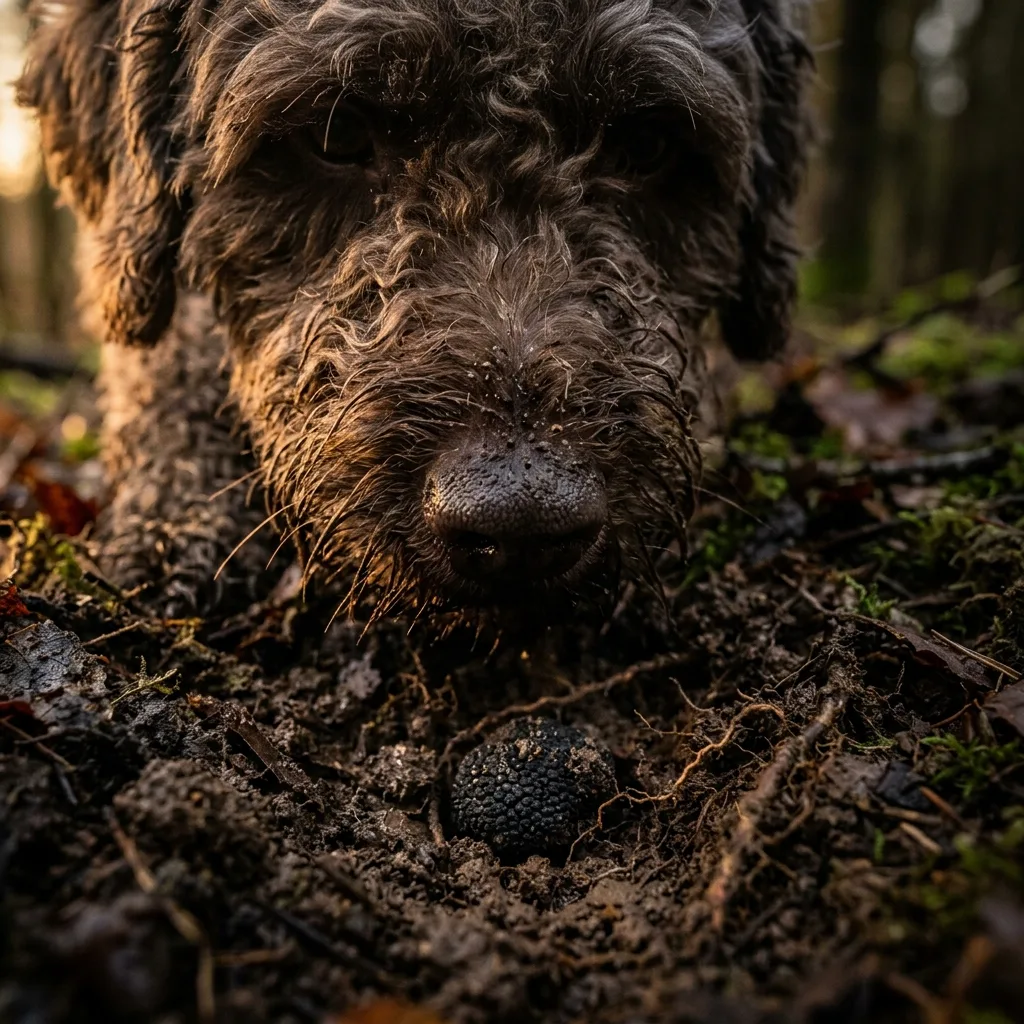
Lagotto discovering a truffle
The nose that changed history — refined over 500 years of truffle hunting in the Romagna region.

The Nose That Changed Everything

Where humans see with eyes, the Lagotto sees with their nose. Centuries of evolution have built an olfactory instrument so precise, it can sense a truffle buried two feet underground from fifty meters away.

The Truffle Hunter's Nose

The Lagotto Romagnolo's nose is their most remarkable feature. Refined over centuries to detect the subtle underground aroma of truffles, their olfactory system is among the most sensitive in the canine world. They don't just smell — they create complex olfactory maps of their environment, reading the world through scent the way we read through sight.

Methodical Search Pattern

A skilled Lagotto doesn't randomly wander — they conduct systematic searches, criss-crossing terrain along diagonal lines. They adapt their speed and range based on wind conditions and terrain. This "quartering" pattern is instinctive in the breed and becomes more refined with training and experience.

The "Scent Cone" Technique

When a Lagotto catches an interesting odor, watch for the shift: they may raise their head, stop moving, and take deep breaths — using air scenting to orient toward the source. As they narrow in, they lower their nose to the ground for precision tracking. The transition between air scenting and ground scenting is a beautiful thing to witness.

Body Language Cues

Learn to read your Lagotto's signals: a slowing pace means they've entered a scent field. Tail sweeping becomes more vigorous as they approach the source. A hard stop with intense ground sniffing means they've found it. They may begin to dig — a well-trained dog will indicate and wait for the handler rather than excavating independently.

Home Scent Games

  • Find It: Hide treats in increasingly difficult locations
  • Muffin Tin Game: Place treats under tennis balls in a muffin tin
  • Box Search: Hide a scented article among several cardboard boxes
  • Snuffle Mat: Scatter kibble in a textured mat for foraging
  • Trail Scenting: Drag a treat along the ground, leave it at the end
  • Name That Toy: Teach them to identify toys by name using scent + visual cues
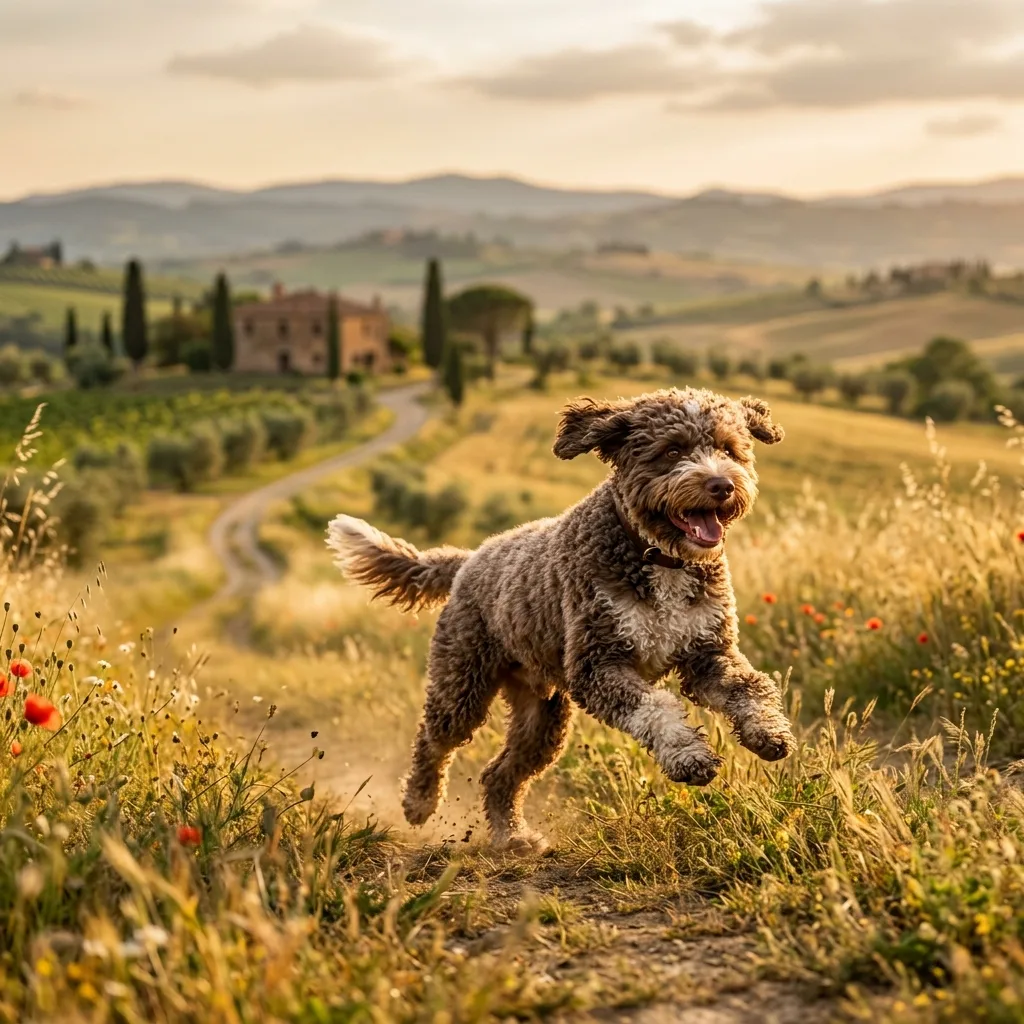
Lagotto Romagnolo running through Italian countryside
The Lagotto thrives on movement, mental challenge, and partnership — channeling centuries of working instinct.

The Art of Earning Their Trust

The Lagotto cannot be commanded. They can only be invited. The moment you understand this — the moment you stop demanding and start partnering — you will unlock a dog that will astonish you.

The Golden Rules of Lagotto Training

The Lagotto Romagnolo is one of the most trainable breeds alive — but only with the right approach. Their emotional sensitivity means they respond profoundly to your energy. A calm, confident, consistently positive trainer will bring out the best in this breed. A harsh, frustrated, or inconsistent approach will create anxiety, shutting down their willingness to engage.

Essential Principle
Never use aversive training methods (prong collars, shock collars, alpha rolls, or yelling) with a Lagotto. Their sensitivity means these methods don't just fail — they actively cause psychological harm and damage the trust that is the foundation of your relationship. Positive reinforcement is the only appropriate methodology for this breed.
  • Keep sessions short and sweet: 3–5 minutes for puppies, 10–15 minutes for adults. Multiple short sessions beat one long one every time.
  • End on success: Always finish a training session with something the dog can do well, so they associate training with positive feelings.
  • Use high-value rewards: Real meat, cheese, or liver treats get better results than kibble, especially for important skills like recall.
  • Be consistent with cues: Choose one word per command and stick with it. "Down" means "lie down" every time — not sometimes "get off the couch."
  • Train in different locations: A behavior learned in the kitchen isn't automatically known at the park. Practice in 3+ locations to "proof" any behavior.
  • Respect their intelligence: If your Lagotto seems to be ignoring a command, they may be bored with repetition. Mix things up, add variety, and keep them guessing.

Priority Skills by Life Stage

8–16 Weeks

  • Name recognition
  • Sit (lure method)
  • Come/Recall (short distances)
  • Crate comfort
  • Handling exercises
  • Potty cue word

4–6 Months

  • Stay (building duration)
  • Down
  • Leave it / Drop it
  • Leash manners
  • Place command
  • Beginning scent games

6+ Months

  • Reliable off-leash recall
  • Impulse control games
  • Advanced scent work
  • Settle on mat
  • Trick training
  • Real-world proofing

Scent Work Enrichment

The Lagotto's nose is their superpower — channel it! Scent work provides deep mental satisfaction that physical exercise alone cannot match. A 15-minute nosework session can tire out a Lagotto more effectively than a 1-hour walk.

Starter Scent Game: "Find It"
Start by showing your dog a treat, then while they watch, place it 2 feet away and say "find it!" Gradually increase difficulty: hide treats behind furniture, in boxes, under cups, in different rooms. Your Lagotto will become obsessed with this game — and it's the foundation of all professional nosework, truffling, and scent detection training.
The Foundation of a Lifetime Together

Every extraordinary partnership is built on basics done brilliantly. Getting this right in the first weeks sets the emotional foundation for everything that comes after.

8–12 Weeks
Every 30–60 minutes when awake
Bladder capacity is tiny. Take out immediately after waking, eating, drinking, and playing. Expect accidents — they are part of the learning process. Use a cue word ("go potty") consistently.
3–4 Months
Every 1.5–2 hours
Improvement begins! Puppies start recognizing the feeling of a full bladder. Continue the routine rigidly. Celebrate every outdoor success with treats and praise.
4–6 Months
Every 3–4 hours
Most puppies have significantly fewer accidents. The cue word should be working. If regression occurs, return to basics — more frequent outings and closer supervision.
6+ Months
Every 4–6 hours (adult schedule)
Should be largely housetrained. Transition to a regular adult schedule: morning, midday, afternoon, after dinner, and before bed. Overnight holding is typically reliable by now.
The "Two-Squat Rule"
Never rush your puppy back inside after the first elimination. Many puppies will pee, get distracted, and then still need to poop (or vice versa). Wait at least 2–3 minutes after the first successful elimination before heading inside. This one tip prevents a huge percentage of "they JUST went outside and then came in and had an accident!" situations.
Never Punish Accidents
Rubbing a dog's nose in an accident, yelling, or using any form of punishment for indoor elimination does NOT teach them where to go. It teaches them to fear eliminating in front of you — which means they'll sneak off to hidden spots. Clean thoroughly with enzymatic cleaner (not ammonia-based), maintain your routine, and increase supervision.

When They're Trying to Tell You Something

Every behavior problem is a message. Lagottos don't misbehave — they communicate. Learning to decode their language transforms frustration into profound connection.

Separation Anxiety

The #1 behavioral challenge with this breed. Their deep attachment means being alone can cause genuine distress. Address through systematic desensitization: practice departures starting with seconds, gradually building to hours. Provide high-value departure treats (frozen Kongs). Create a comfortable "safe haven." Never make departures or returns emotional events. If severe, consult a veterinary behaviorist — medication may help alongside behavioral modification.

Excessive Barking

Lagottos are naturally vocal — they're alerting you to changes in their environment. Management strategies: acknowledge the bark ("thank you"), then redirect with a "quiet" cue or alternative command. Teach a "speak" command first — paradoxically, this makes "quiet" easier to teach. Ensure adequate exercise and mental stimulation — a bored Lagotto barks more. Never yell "quiet!" — to them, it sounds like you're barking along.

Digging Behavior

This is literally in their DNA — they were bred to dig for truffles. Rather than fighting the instinct, channel it: create a designated "digging pit" (a section of garden or a sandbox) and bury treats there to encourage digging in the right spot. Redirect unauthorized digging with a firm "leave it" and guide to the approved area. Increased scent enrichment reduces the drive to dig randomly.

Fearfulness & Noise Sensitivity

Some Lagottos develop noise sensitivities (thunderstorms, fireworks, construction). Never force exposure or punish fearful reactions. Create a safe space where they can retreat. Consider: calming music, pressure wraps (ThunderShirt), and counter-conditioning (pairing scary sounds with high-value treats at low volume, gradually increasing). For severe cases, veterinary-prescribed anti-anxiety medication during known events is appropriate.

Guardians of Their Wellbeing

The Lagotto is one of the healthiest, longest-lived breeds on earth — routinely reaching 15–17 years. But this longevity is not passive. It must be protected with knowledge, vigilance, and a responsible breeder.

Condition Severity Onset Age Description DNA Test
Lagotto Storage Disease (LSD) Critical 4 months – 4 years Progressive neurodegenerative disease causing uncoordinated movement, behavioral changes (aggression, depression, restlessness), and difficulty walking. Fatal condition with no cure. Responsible breeders test all breeding stock. Available
Benign Familial Juvenile Epilepsy (BFJE) Self-Resolving 5–9 weeks Inherited neurological condition causing seizures in young puppies. Appears alarming but typically resolves spontaneously by 8–13 weeks. Episodes may include trembling, stiffness, or brief loss of consciousness. Most affected puppies grow into completely healthy adults. Available
Hyperuricosuria (HUU) Moderate Variable Elevated uric acid levels in urine leading to painful bladder or kidney stone formation. Managed through diet (low-purine) and hydration. Affected dogs should avoid high-purine foods (organ meats) and maintain high water intake. Available
Hip Dysplasia Moderate Develops during growth Hip joint malformation that can lead to arthritis and mobility issues. Screening via OFA or PennHIP radiographs is standard. Managed through weight control, appropriate exercise, joint supplements, and in severe cases, surgery. Screening (X-ray)
Cerebellar Abiotrophy Severe Variable Degenerative brain condition affecting coordination, balance, and movement. Progressive disorder with no cure. Affected dogs show increasingly impaired motor skills. Genetic testing of breeding stock is critical. In development
Patellar Luxation Moderate Variable Kneecap slips out of its normal position, causing intermittent lameness. Ranges from mild (occasional skipping) to severe (requires surgical correction). Weight management and controlled exercise help manage mild cases. Screening (physical exam)
Recommended Genetic Tests Before Purchasing
Always ask the breeder for documentation of: LSD DNA test (clear or carrier status), BFJE DNA test, HUU DNA test, OFA or PennHIP hip evaluation, and eye examination by a board-certified ophthalmologist. A reputable breeder will have CHIC (Canine Health Information Center) certification or equivalent documentation readily available.

Tending the Curls That Defined a Breed

Those rolling, woolen curls are more than beauty — they are centuries of weather-hardened engineering. Learn to tend them properly and your Lagotto will remain comfortable, healthy, and magnificent.

Weekly Brushing

Use a slicker brush and wide-toothed metal comb weekly. Focus on high-friction areas: behind the ears, armpits, groin, and legs where mats form most easily. The coat is low-shedding — loose hair stays trapped in the curls and will mat against the skin if not removed. Dedicate 20–30 minutes weekly to a thorough brushing session.

Professional Grooming

Schedule professional grooming every 6–8 weeks. The coat should be kept at a functional, rustic length — typically 1 to 1.5 inches. Avoid "sculpting" or blow-drying the coat into poodle-like shapes. The breed standard calls for a natural, curly, slightly unkempt look. Find a groomer experienced with curly-coated breeds.

Ear Care

The breed grows hair inside the ear canal, which traps wax and moisture — creating a perfect environment for infections. Hair should be gently plucked regularly by a groomer or vet. Check and clean ears weekly with a vet-approved ear cleaning solution. Watch for signs of infection: head shaking, scratching, odor, or redness.

Recognized Coat Colors

Lagotto coat colors can change significantly during the first two years of life. Many brown puppies lighten over time, and white-and-brown puppies may develop roaning.

Off-White
Solid creamy white
Orange
Rich warm orange
Brown
Various shades
Brown Roan
Brown with white mixture
Orange Roan
Orange with white mixture
White & Brown
Parti-colored patches
Important Note on Color
Black is explicitly prohibited in the breed standard and is a disqualifying fault. No black markings, black nose pigment, or black coat color should be present. The sable gene exists in the breed but is categorized under brown variations.

Fueling a Life of Purpose

What goes into your Lagotto shapes everything that comes out — their energy on the trail, the luster of their coat, the clarity in their eyes. Feed them like the extraordinary athlete they are.

Puppy (0–12 months)

High-quality puppy formula with animal protein as the primary ingredient. Avoid high-protein "performance" formulas — rapid growth can increase joint risk. Feed 3–4 times daily until 6 months, then transition to 2 meals. Soak food in warm water for very young puppies. Monitor body condition — ribs should be easily felt but not visible.

Adult (1–8 years)

High-quality adult food with balanced protein (25–30%), healthy fats (omega-3 and omega-6 for coat health), and essential vitamins/minerals. Feed 2–3% of ideal body weight daily, split into 2 meals. Include: chicken, turkey, beef, or fish as primary protein. Supplement with occasional fresh foods: blueberries, carrots, cooked sweet potato. Ensure constant access to fresh water.

Senior (8+ years)

Senior formula with adjusted calories for slower metabolism. Increased joint support (glucosamine, chondroitin, omega-3). Easier-to-digest proteins. May need softened food if dental issues are present. Monitor weight carefully — obesity accelerates joint deterioration. Consider supplements: fish oil (brain and coat health), probiotics (digestive health), SAMe (cognitive support).
Foods to Avoid
Chocolate, grapes, raisins, onions, garlic, xylitol (artificial sweetener), macadamia nuts, avocado, cooked bones (splinter risk), alcohol, caffeine, raw bread dough, and high-sodium foods. For Lagottos with HUU (Hyperuricosuria): reduce organ meats, sardines, and other high-purine foods to minimize stone risk.

The Blueprint of Perfection

Behind every magnificent specimen is a blueprint refined over centuries. These are the measurements and characteristics that define the Lagotto Romagnolo as a breed worth preserving.

Male Height
17–19"
43–48 cm at withers
Female Height
16–18"
41–46 cm at withers
Male Weight
28–35 lbs
13–16 kg
Female Weight
24–31 lbs
11–14 kg
Lifespan
15–17 yrs
Exceptional longevity
Body Build
Square
Length ≈ Height
Coat Type
Woolly Curls
Dense, waterproof
Shedding
Minimal
Hypoallergenic-friendly